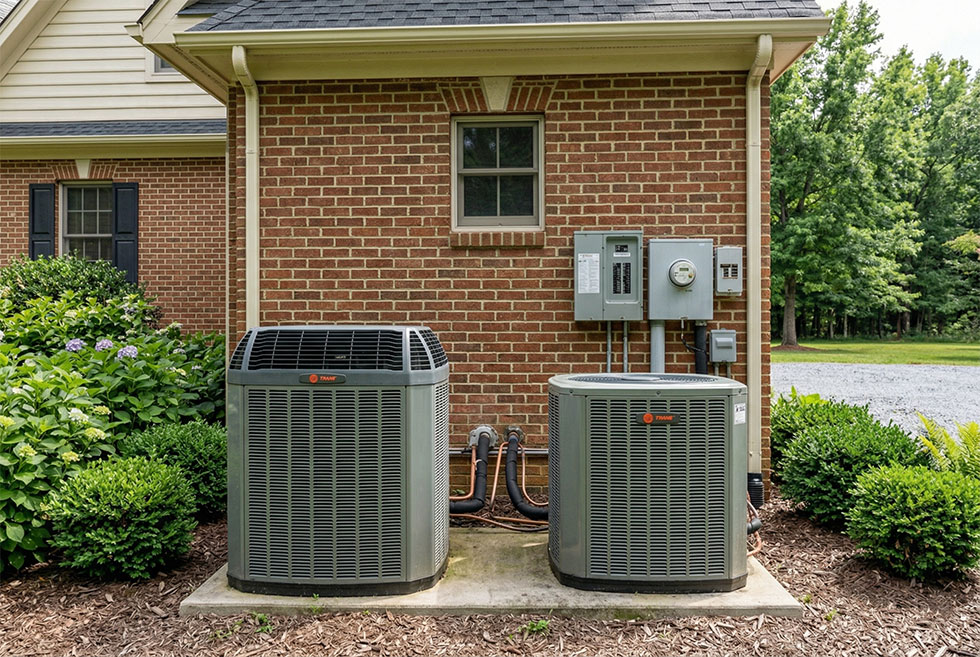
| If your HVAC keeps tripping the breaker, the system is warning you that something is overheating, overloading the circuit, or causing an electrical fault. The most common causes are a dirty air filter, dirty outdoor coils, a bad capacitor, loose wiring, low refrigerant, or a failing compressor. If it trips again after one reset, turn the system off and schedule service. |
When HVAC keeps tripping the breaker, your house is not being dramatic. It is warning you that something in the system is pulling too much power, overheating, or hitting an electrical fault.
We help homeowners in Hampton with AC repair, seasonal tune-ups, system diagnostics, and new equipment installation, so if your cooling system keeps shutting itself off, this is the kind of call we handle every day through our full range of HVAC services.
 That breaker is doing its job. It cuts power before wires overheat or equipment damage gets worse. The NFPA reports that electrical distribution or lighting equipment is the leading cause of home fire property damage, which is why repeated breaker trips should never be ignored.
The U.S. Department of Energy also notes that dirty filters and coils can cause an AC system to malfunction and can lead to early compressor or fan failure.
At Atlantic PHAC, we have served homeowners across Hampton Roads since 1977. Jordan Hartman now leads the company built by Tom Hartman, and our team brings licensed, bonded, and insured service to homes in Hampton, Newport News, Poquoson, Seaford, and Yorktown.
What It Means When a Breaker Keeps Tripping
A breaker trips to stop unsafe electrical flow. In plain language, it is a safety shutoff. If your HVAC system trips once, you may have had a temporary issue. If it keeps happening, you likely have one of three bigger problems:
- Too much amperage draw
- Too much heat is building up in the system
- A short or grounded electrical fault
That is why repeatedly flipping the breaker back on is a bad habit. It can hide the real problem while the system keeps stressing motors, wiring, or the compressor.
| “A tripped breaker is not the problem. It is the warning sign. If it keeps happening, the system needs to be checked before a small repair turns into a major one.”
– Jordan Hartman, Owner/Operator – Atlantic PHAC |
The Most Common Reasons This Happens
Dirty air filter
This is one of the most common causes. A clogged filter restricts airflow, which makes the blower work harder and can push operating temperatures up. The Department of Energy says dirty, clogged filters reduce airflow and system efficiency, and replacing a dirty filter with a clean one can lower air conditioner energy use by 5 to 15 percent.
Dirty condenser coils
Your outdoor coil has to release heat. If it is coated with dirt, pollen, grass clippings, or coastal grime, the system runs hotter and longer. Dirty filters and coils can cause the system to malfunction and can lead to early compressor or fan failure.
Failed capacitor
A weak or failed capacitor can keep the condenser fan motor or compressor from starting cleanly. Instead of a smooth startup, the motor strains, hums, and pulls harder on the circuit. That extra draw can trip the breaker, especially during hot Hampton afternoons when your system already has a heavy workload.
Grounded or shorted compressor
The compressor is the most expensive part of many cooling systems. If internal windings break down and touch the casing, the breaker can trip immediately. In those cases, the breaker is protecting the system and the home from a bigger electrical problem. Your compressor is the electric motor-driven pump that circulates refrigerant between the indoor and outdoor coils, so when it fails electrically, it is a major issue.
Broken condenser fan motor
If the outdoor fan is not moving heat out of the unit, pressure and temperature rise fast. That can overload the system and trip a safety device or the breaker itself. Homeowners often notice this as a unit that hums, struggles to start, or shuts off during a long cooling cycle.
Loose or corroded wiring
Electrical connections wear down over time. Corrosion, vibration, and heat can all weaken a connection. Our bonded and insured technicians will inspect electrical terminals, clean and tighten connections if needed, and check for airflow and refrigerant problems during service.
Low refrigerant
Low refrigerant does not always trip a breaker by itself, but it can make the system run longer, strain the compressor, and operate at the wrong pressures. DOE guidance says refrigerant leaks should be repaired by a trained technician rather than simply topped off.
Jordan Hartman notes, “The simple problems matter. A dirty filter, dirty coil, or weak capacitor can push the rest of the system harder than it should have to work.”
Signs You Should Stop Resetting the Breaker
You should stop trying to restart the system and call for service if:
- The breaker trips again right away
- The outdoor unit hums but does not fully start
- You smell something hot or electrical
- The air coming through the vents is weak or warm
- The system runs for a short time, then shuts down
- You hear buzzing, clicking, or a loud strain at startup
Those signs point to a system that needs diagnosis, not guesswork.
What You Can Check Before You Call
There are a few safe things you can do before you book a service visit.
- Check the return air filter. If it looks packed with dust, replace it.
- Look at the outdoor unit. Clear leaves, grass, and debris from around it.
- Check the thermostat settings. Make sure the system is calling for cooling.
- Reset the breaker once, and only once. If it trips again, leave it off.
- Do not open electrical panels or try to test capacitors, wiring, or compressor terminals yourself.
These steps can rule out simple airflow problems, but anything electrical should stay in trained hands.
How We Diagnose the Problem
When we inspect a system like this, we look at airflow first, then electrical load, then equipment condition. That usually includes filter condition, coil condition, capacitor testing, fan motor performance, wire connections, and compressor behavior.
If the system is aging out, we can also talk through repair versus replacement options and help you compare air conditioner repair in Hampton with broader air conditioning service options. We also offer free estimates on replacement systems.
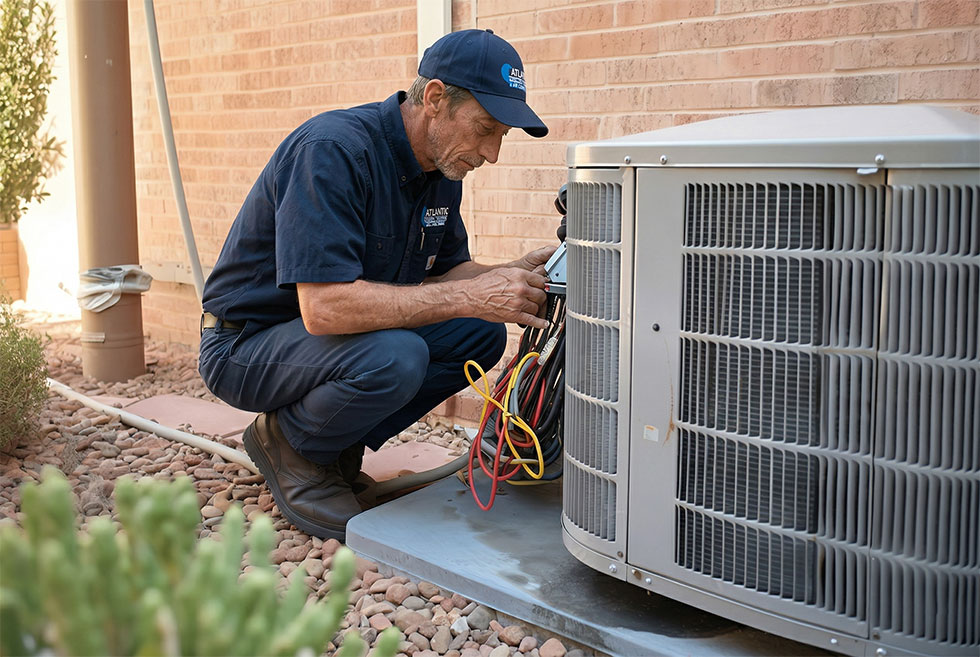
How HVAC Maintenance Helps Prevent Breaker Trips
Regular HVAC maintenance gives you a better shot at catching small problems before they turn into a shutdown on the hottest day of the summer. Coil cleaning, filter changes, electrical checks, airflow review, and condenser inspection all play a part. You can also check out our HVAC maintenance tips for practical ways to stay ahead of common trouble.
Good HVAC maintenance also matters more on the Virginia Peninsula than many homeowners realize. Salt air, humidity, pollen, and long cooling seasons can all add stress to outdoor equipment. That is one reason a system in Hampton can start showing problems after a dirty spring or a long stretch of humid weather.
“A lot of breaker trips start with a maintenance problem that was easy to miss. When we catch it early, homeowners usually spend less and get better life out of the system,” says Jordan
Why This Problem Shows Up So Often Around Hampton
We see this issue in real neighborhoods across the Virginia Peninsula, not just as a general service call on a map. In Hampton, that includes places like Fox Hill, Phoebus, Wythe, Buckroe Beach, and Coliseum Central.
In Newport News, we work in communities such as Hilton, Denbigh, Kiln Creek, Lee Hall, Hidenwood, City Center, and Port Warwick.
This is also a common problem that we address in York County and nearby areas, including Tabb, Running Man, Marlbank Cove, Dandy, Grafton, Seaford, and Woods of Tabb.
A breaker trip usually starts with a problem that has been building for a while, and the longer it goes on, the more strain it puts on the system. You can see our broader coverage across the Virginia Peninsula service area and on the main Atlantic Plumbing, Heating & Air Conditioning page.
Why Homeowners Call Us for This Kind of Repair
Breaker trips are not a one-size-fits-all problem. Some calls end with a filter change and coil cleaning. Others lead to a capacitor replacement, a motor repair, or a larger compressor diagnosis. That is why homeowners want a company that has seen the full range of failures and knows the local housing stock, summer load, and service patterns on this side of Hampton Roads.
Atlantic PHAC has served the region since 1977. We are a second-generation, family-owned company, and our technicians are licensed, bonded, and insured. We also offer flat-rate pricing, which gives homeowners a clearer idea of what to expect when an HVAC problem needs immediate attention.
📞 Call us now!
Hampton: (757) 838-1036
Newport News: (757) 877-2696
York County: (757) 898-5529
Poquoson: (757) 868-8590
🌐 Visit us online: atlanticphac.com
📍 Proudly serving the Virginia Peninsula