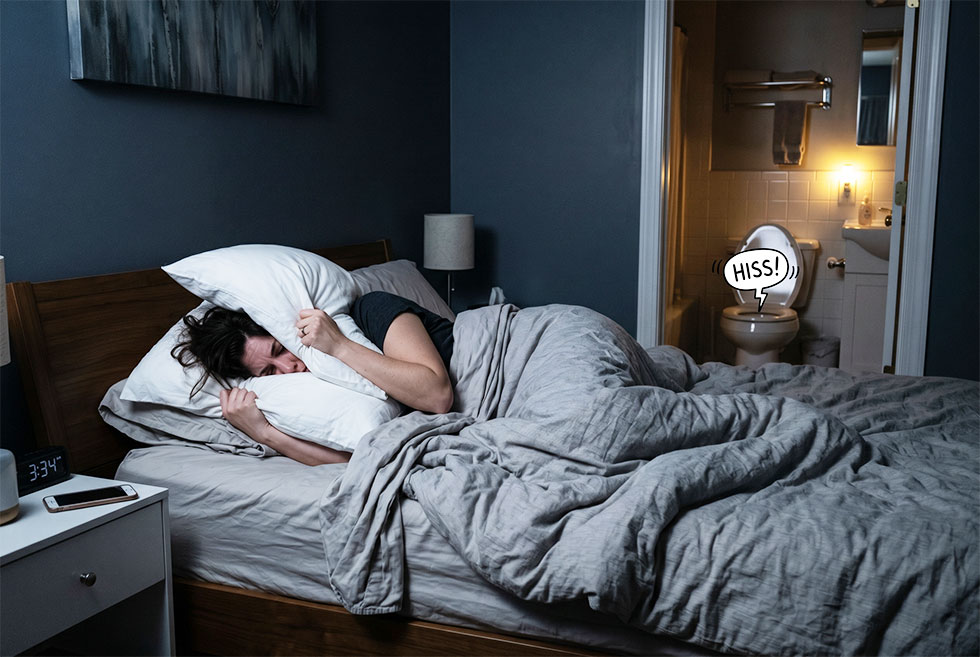
| A running toilet is usually caused by a bad flapper, misadjusted float, faulty fill valve, or tangled chain. Homeowners can check the tank, test for leaks with food coloring, and adjust simple parts. Call for toilet repairs in Hampton if the problem continues, leaks, or risks overflow. |
Why does my toilet keep running like it is still working on the same flush from 10 minutes ago? Most of the time, the problem comes from a worn flapper, a float set too high, a faulty fill valve, or a chain that keeps the flapper from sealing after you flush.
That constant sound can cost you money. The EPA says a running toilet can waste about 200 gallons every day, and worn toilet flappers rank among the common household leak sources listed by EPA WaterSense. A small tank part can turn into a large water bill if you ignore it.
Atlantic PHAC has served Hampton and the Virginia Peninsula since 1977. We handle residential and commercial plumbing, heating, furnace, boiler, and air conditioning service across Hampton, Newport News, Poquoson, Seaford, and Yorktown. If you need toilet repairs in Hampton, our insured and bonded technicians can find the cause and fix it.
Why Your Toilet Runs After You Flush
A toilet tank should refill, stop, and stay quiet after each flush.
 When the toilet keeps running, water continues moving from the tank into the bowl or into the overflow tube. That means one of the parts inside the tank has failed, shifted, or lost its seal.
The most common parts involved are:
- Flapper
- Fill valve
- Float
- Overflow tube
- Flush valve seat
- Handle chain
- Tank-to-bowl gasket
Some fixes take a few minutes. Others need a plumber, especially if water leaks around the base or the toilet will not shut off.
The Flapper May Not Be Sealing
The flapper sits at the bottom of the tank. It lifts when you flush, then drops back down to seal the opening.
When it wears out, bends, hardens, or gets coated with minerals, it may not close all the way. Water then slips from the tank into the bowl. The fill valve turns on again to replace that lost water, which makes the toilet sound like it never stops running.
You can check the flapper with a simple dye test. Add a few drops of food coloring to the tank. Do not flush. Wait 10 minutes. If the color shows up in the bowl, water is leaking past the flapper.
A new flapper often solves the issue. Bring the old one to the hardware store so you get the right size and style.
The Float Or Water Level May Be Too High
The float tells the fill valve when to stop adding water to the tank.
If the float sits too high, the tank overfills. The extra water spills into the overflow tube and runs into the bowl. You may hear a steady hissing sound or see water moving inside the tube.
Try this check:
- Remove the tank lid.
- Flush the toilet.
- Watch the water rise.
- See if it flows into the overflow tube.
- Adjust the float lower if the water level rises too high.
Most toilets should stop filling below the top of the overflow tube. Many tanks have a water line mark inside.
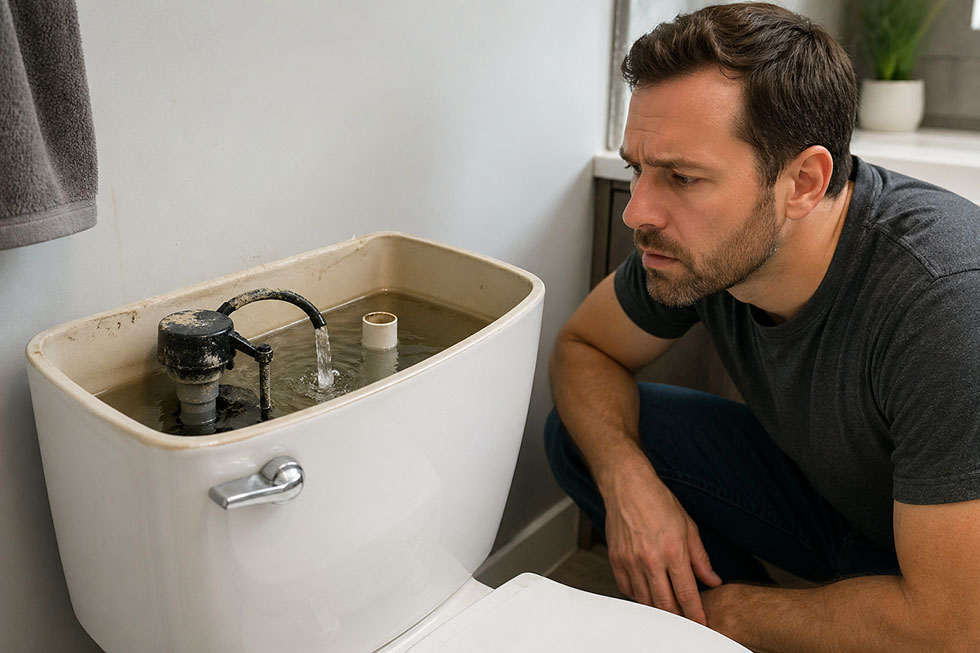
The Fill Valve May Be Dirty, Stuck, Or Worn
The fill valve brings fresh water into the tank after a flush.
If it gets clogged with sediment, sticks open, or wears out, it may not shut off. You may hear hissing, sputtering, or a steady refill sound.
This issue can happen in newer homes near Coliseum Central and older homes in Phoebus, Wythe, Fox Hill, and Buckroe Beach. Local water conditions, age, and daily use all affect small toilet parts.
You may need a new fill valve if:
- The tank keeps refilling after the water reaches the correct level
- The shutoff sound never happens
- The valve looks cracked or corroded
- The water supply valve will not turn
- The toilet runs again soon after adjusting it
If the shutoff valve near the wall feels stuck, do not force it. A broken shutoff valve can turn a small repair into a water leak.
The Chain May Be Too Tight, Too Loose, Or Tangled
The handle chain connects the flush handle to the flapper.
If the chain is too tight, it holds the flapper open. If it is too loose, it may slide under the flapper and block the seal. Either problem can keep water moving from the tank to the bowl.
The handle-jiggle test can help.
If you jiggle the handle and the running stops, the chain may need adjustment. You want a little slack, but not so much that the chain gets trapped under the flapper.
The Flush Valve Seat May Be Rough Or Scaled
The flapper seals against the flush valve seat.
If that surface feels rough, dirty, or coated with mineral scale, even a new flapper may not seal well. You may see small bubbles, ripples in the bowl, or hear the toilet refill every few minutes.
You can gently wipe the seat with a sponge. Avoid harsh scraping. If the surface stays rough or damaged, you may need professional repair.
The Refill Tube May Sit Too Far Into The Overflow Tube
The refill tube sends water into the overflow tube after each flush. It helps refill the bowl.
If someone pushes that small tube too far down into the overflow tube, it can create a siphon effect. That can pull water from the tank and make the toilet keep refilling.
The refill tube should clip near the top of the overflow tube. It should not extend deep inside it.
A Tank-To-Bowl Gasket Or Base Leak May Be The Real Problem
A running toilet usually starts inside the tank.
Still, you should also check the floor and the area between the tank and bowl. Water around the base can point to a wax ring problem, loose bolts, or a deeper leak.
Call a plumber if you see:
- Water near the toilet base
- Moisture between the tank and bowl
- A toilet that rocks or shifts
- Sewer odors
- Overflowing water
- Water stains on nearby flooring
Our toilet repairs in Hampton include leaks, running toilets, weak flushing, clogged toilets, routine maintenance, and new toilet installation.
When To Call the Pros
Some running toilets need more than a quick adjustment.
Call us for toilet repairs in Hampton or anywhere in the Virginia peninsula if the toilet keeps running after you check the flapper, float, and chain. You should also call if the fill valve will not shut off, the water supply valve is stuck, or you notice water around the base.
You may also need help when:
- The toilet runs again after a new flapper
- The tank refills on its own
- The toilet flushes weakly
- The bowl water level changes without flushing
- The toilet clogs often
- The tank or bowl has a crack
- The shutoff valve drips
- You have a concealed toilet tank
A running toilet can also signal age-related wear. Older fixtures may need repeated parts, especially in older Hampton homes near Downtown, Wythe, and Phoebus.
Local Plumbing Help Across Hampton And The Virginia Peninsula
Hampton homes do not all have the same plumbing setup.
A home near Buckroe Beach may deal with a different mix of age, humidity, and fixture wear than a newer home near Willow Oaks or Coliseum Central. Homes across Newport News, Poquoson, Seaford, and Yorktown also vary by layout and plumbing age.
That local knowledge matters. We check the full toilet system instead of swapping one part and hoping the issue stops.
Most toilet problems are not isolated. If one part fails, others are often close behind. We look at the full system so homeowners do not deal with repeat issues.
Why Homeowners Call Atlantic PHAC
Atlantic PHAC brings decades of local plumbing experience to each service call.
Our company was founded in 1977. We offer flat-rate pricing, friendly service, and residential plumbing repairs across Hampton and the surrounding Virginia Peninsula.
Homeowners call us because we provide:
- Insured, bonded, and drug-tested technicians
- Competitive pricing
- Long-term employees who know the work
- Plumbing, heating, furnace, boiler, and AC service
- Help with daily repairs and plumbing emergencies
- Service across Hampton, Newport News, Poquoson, Seaford, and Yorktown
We also handle toilet maintenance, replacement parts, and installation when repair no longer makes sense.
FAQs About Running Toilets
Why Does My Toilet Keep Running Randomly?
Why does my toilet keep running randomly? It may have a slow flapper leak, a faulty fill valve, or water set too high in the tank. This can cause the tank to refill on its own even when no one flushed.
Is A Running Toilet An Emergency?
A running toilet is not always an emergency, but you should not ignore it. It can waste a large amount of water and raise your bill. Call right away if the toilet overflows, leaks onto the floor, or will not shut off.
Can I Fix A Running Toilet Myself?
You may be able to fix it if the problem comes from the chain, float, or flapper. If the fill valve, shutoff valve, gasket, or base seal leaks, call a plumber.
Who Should I Call For Toilet Repairs In Hampton?
Call Atlantic PHAC for running toilets, leaks, clogs, and toilet replacement across Hampton and the Virginia Peninsula. You can also read our guide to the best toilet repair service in Hampton for more help.
Stop The Running Before It Runs Up Your Bill
If you keep asking why does my toilet keep running, the safest answer is to check the tank first and call a plumber if the simple fixes do not hold. A worn flapper, high float, bad fill valve, or leaking gasket can waste water every day.
Atlantic PHAC helps Hampton homeowners and businesses with running toilets, leaks, clogs, repairs, maintenance, and plumbing emergencies. Call us for service in Hampton, Newport News, Poquoson, Seaford, Yorktown, and nearby Virginia Peninsula communities.
📞 Call us now!
Hampton: (757) 838-1036
Newport News: (757) 877-2696
York County: (757) 898-5529
Poquoson: (757) 868-8590
🌐 Visit us online: atlanticphac.com
📍 Proudly serving the Virginia Peninsula